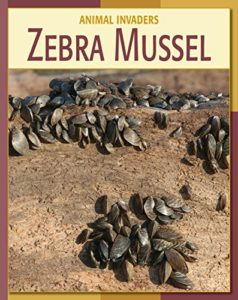
Zebra Mussles
The best defense against the spread of zebra mussels is to restrict itsmovement between lakes and rivers. Once they become established in a lake, there is no known way to eliminate them. Here are some precautions to help prevent the spread of zebra mussels and other exotic species:
| Inspect your boat, trailer, boating equipment, fishing tackle and nets and remove any visible plants or animals before leaving any lake or river.
Drain water from motor, live well, bilge and transom wells while on land before leaving the boat launch area. Empty your bait bucket on land before leaving the waterbody. Never release live bait into a waterbody, or release animals from one waterbody into another. |
 |
Wash/Dry your fishing tackle, nets, boat and equipment to kill harmful species that were not seen at the boat launch. Some species can survive for several days out of water, so it is important to:
- rinse your boat and equipment with hot tap water (> 50° C); or
- spray your boat and equipment with high pressure water (250 psi); or
- dry your boat and equipment for at least five days, before transporting to another body of water.
For more details see the OFAH web site.
Help Prevent the Spread of Tree Killing Bugs
Asian Longhorned Beetle and Emerald Ash Borer
Firewood often contains insects and plant diseases. Cottagers or other visitors who bring firewood from home may accidentally spread those diseases that threaten the health of our forests. The Asian longhorned beetle and emerald ash borer are of particular concern. They are both recent arrivals to Canada and without natural controls here.
| The emerald ash borer was thought to be confined to southwestern Ontario and southeast Michigan, where it has killed millions of ash trees. But more recently it has been seen in Ottawa, which demonstrates the importance of controlling its spread. The movement of firewood has been the main culprit in its rapid spread in both the U.S. and Canada over the past year. As a result, a quarantine has been imposed which prohibits the movement of firewood in several parts of Ontario. Here in Eastern Ontario we should be taking this risk seriously.
The Asian longhorned beetle has been found attacking hardwood trees between Vaughan and Toronto. Both insects can be easily spread in firewood, which may look normal, but still be infested with the insects.How you can help: · Do not move firewood, especially firewood obtained from areas under quarantine such as Essex County and the U.S. · Buy and use only local firewood · Ask your supplier where their wood comes from If you have questions call the Canadian Food Inspection Agency at 1-800-442-2342 or visit its website. |
Cormorants
Golden Lake is one of many lakes in Ontario that have seen an increase in the number of nesting cormorants over the past few years. These birds are not really an invasive species in the normal sense because they are indigenous to our region. However, toxic contamination in the lakes caused egg shell thinning and just about eliminated the birds from the province. In some ways the return of the cormorant is a sign of improved water quality.
| However, the populations have increased so fast that their status as an endangered species is being challenged. Bill 62, regarding this change to the Fish and Wildlife Conservation Amendment Act (Double-Crested Cormorants), 2008 has had its first reading and is scheduled to be debated in the Ontario Legislature on December 3rd, 2009.Here is a page of background information on cormorants. |
Water soldier plant
From an article in the Toronto Star, May 26, 2009
An aquatic invader is camping out on the banks of the Trent-Severn Waterway, and from the sounds of it, is getting very comfortable.
| “We have been doing surveillance of this plant; it is the first known sighting in Canada,” said Francine MacDonald, an aquatics biologist at the Ontario Federation of Anglers and Hunters who is an expert in invasive species.
The new undesirable in her sights is called the water soldier, Stratiotes aloides. It resembles an aloe vera or spider plant, but with one significant difference: “It is very sharp – just to pull it out of the water you have to put gloves on,” said MacDonald. |
The Trent-Severn batch was reported by a Hastings area resident last fall. He spotted a handful of the plants in 2007 and tried to weed them out. But the water soldier sprung back. Its ranks have swelled to the hundreds and there is a satellite group of similar size about two kilometres downriver.
Last week, a team went to the site to observe and count the plants.
“From what we have seen, it has become an impediment to boaters,”
MacDonald said. “It could be a huge problem for swimmers.”
Like spider plants, water soldiers have offsets, little plants that detach and take root at new locations, so moving water offers the perfect method for them to spread.
Unfortunately, so are careless gardeners. Water soldiers and many other invasive species can be purchased at Ontario nurseries.
“If you are going to use exotic plants, keep them contained, don’t enable them to escape” by planting them in flood plains or near waterways, said MacDonald.
The biologist said for safety reasons, chemical solutions to repel the invaders are limited. “A lot of times it is very difficult to control aquatic plants … we hope we have found this one early enough.”
Anyone who spots water soldiers in the wild should call the invasive species hotline at 1-800-563-7711.
Spiny waterflea and fishook wateflea
| The spiny water flea feeds on small animal life called zooplankton. When populations of this invader are high, zooplankton consumption can be significant. Compared to native zooplankton species, it eats up to three times as much food. Research on the impact of the spiny water flea has shown changes in both the abundance and the diversity of zooplankton species. However, it is still too early to determine if spiny water flea will alter our aquatic ecosystems to the detriment of fish populations. |
Fish will feed on spiny water fleas. However, for fish smaller than 10 cm ( 3.9 in ) long, the tail spine of the spiny water flea gets caught in the throat and the organism is literally coughed out. To date, scientists have not observed a decline in the number of small fish due to the fish’s inability to feed on spiny water flea and competition with it for food. However, over time, the possibility of an impact on fish populations is possible.
Spiny water fleas can become entangled in fishing lines and downrigger cables. When the cable is pulled from the water, the spiny water fleas attached to the cable look like straight pins. You may see them raise and lower their tails as they cling to the line.
Prevention
The best defense against the spiny water flea is to prevent its transfer to new lakes or rivers. Spiny water flea eggs and adults can get into bilge water, bait buckets, livewells and coat fishing lines when boating or fishing in infested waters. Please take the following precautions to prevent the spread of spiny water flea and other invading species to different rivers and lakes:
Inspect your boat, trailer, boating equipment, fishing tackle and nets and remove any visible plants or animals before leaving any river or lake.
Drain water from motor, live well, bilge and transom wells while on land before leaving the waterbody.
Empty your bait bucket on land before leaving the waterbody. Never release live bait into a waterbody, or release animals from one waterbody into another.
Wash/Dry your fishing tackle, nets, boat and equipment to kill harmful species that were not seen at the boat launch. Some species can survive for several days out of water, so it is important to:
- rinse your boat and equipment with hot tap water (> 50° C); or
- spray your boat and equipment with high pressure water (250 psi); or
- dry your boat and equipment for at least five days, before transporting to another waterbody;
For more details see the OFAH web site.